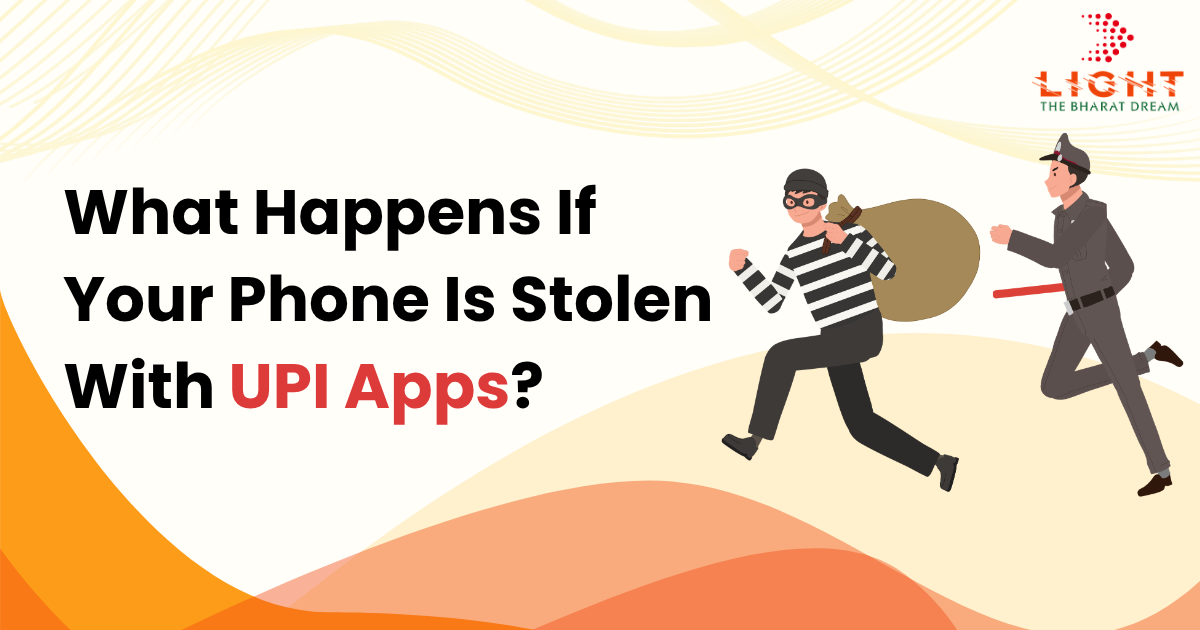
What Happens If Your Phone Is Stolen With UPI Apps?
Your smartphone can be used as a mini bank in the modern digitalized world. UPI apps are utilized in nearly all daily transactions, such as rent, food, etc. Owing to this reason, your phone holds very sensitive financial details despite the fact that it does not necessarily hold your money.
In cases when your phone is stolen, it is not only about losing the device but also losing control over your online identity. The potential access of their phone is underestimated by many users. A thief does not have to be very skilled; even the simplest operations, such as app-opening or message-checking, could pose a threat if the phone is not secured. That is why it is possible to act immediately and not panic by realizing how serious the situation can be.
Can Someone Access Your UPI If Your Phone Is Stolen?
Is UPI safe without your PIN?
UPI is constructed in layers of security, and a very significant layer of security is your UPI PIN. This PIN is needed with every transaction and is similar to your final approval. Even in the case of a person using your UPI, they cannot transfer money without using the right PIN.
Nevertheless, it also relies on your personal habits as to the degree of safety. In case your PIN is too easy, it is somewhere written, or you shared it with someone, then there will be reduced security. Your money will be safe in most normal cases providing that you have kept your PIN confidential.
What can hackers or thieves actually do?
Someone who steals your phone may first of all attempt to unlock it and see what is inside. In case they have access, they may seek to access your UPI applications, inspect your messages, and explore OTPs. Others can go ahead and attempt to install applications or replace passwords with your mobile number.
In more sophisticated instances, a thief may go as far as to attempt SIM-related deception in order to have control over your number. That is why a SIM card can be considered a very important part of your overall security. Although all of these measures can not ensure your money, they do add to the risk, provided that no urgent action measures are implemented.
What Happens Immediately After Your Phone Is Stolen
Possible risks within the first few hours
The initial hours a phone is stolen are the crucial ones. In this period, your SIM works, and your apps can be left logged in. In case your phone was unlocked or has inadequate security, it may happen that someone is trying to investigate your applications or request OTPs. Although your phone is locked, there is always a chance that you will be attempted multiple times to gain access to your phone or even that your number can be misused. This is what makes it so important to act within a time frame of this window, which may be extremely different in averting any financial harm.
When your money is actually at risk
When your phone is stolen, it is not possible that your money is immediately in danger. The actual risk only starts to arise at some point that some conditions are fulfilled. Users are more likely to abuse your phone in the event that your phone is unlocked, your SIM is not inactive, and your PIN is either familiar or can be quickly guessed. Conversely, when your phone is locked with a heavy lock, and your PIN is secured, there is a very small possibility that someone can use your UPI. It can be useful to understand this so that you can remain composed and concentrate on doing the right things, rather than panicking.
Immediate Steps You Must Take
Step 1: Block your SIM card
The first and most important step is to contact your mobile service provider and block your SIM card. This immediately stops all incoming OTPs and messages, cutting off one of the main ways someone could try to access your accounts.
Step 2: Inform your bank and block UPI
After blocking your SIM, you should inform your bank about the situation. Banks can temporarily disable your UPI services, ensuring that no transactions can be made until you regain control. This step gives you additional peace of mind.
Step 3: Log out or block apps remotely
Most smartphones today allow you to control your device remotely through your Google or Apple account. You can lock your phone, track its location, or even erase all data. This ensures that even if someone has your phone, they cannot access your personal information.
Step 4: File a police complaint
Filing a police complaint may seem like a formality, but it is actually very important. It creates an official record of the incident, which can help in case of fraud, insurance claims, or phone recovery.
Step 5: Change all passwords
As a final safety measure, you should change all your important passwords. This includes your email accounts, banking apps, and any other apps linked to your phone number. This step ensures that even if someone tried to access your accounts earlier, they can no longer.
How to Block UPI Access Without Your Phone
1. Using Bank Helpline Numbers
If your phone is lost or stolen, one of the quickest actions you can take is to call your bank’s customer care. Most banks in India, including State Bank of India, HDFC Bank, and ICICI Bank, offer 24/7 helpline support for emergencies like this.
Once you connect with a representative, they will ask you to verify your identity through basic details such as your registered mobile number, account information, or recent transactions. After successful verification, they can immediately block your UPI services or temporarily freeze your account to prevent any unauthorized transactions. This step is extremely important and should be done as soon as possible.
2. Blocking via Mobile Operator
Another important step is to block your SIM card by contacting your mobile operator. Providers like Jio, Airtel, and Vi allow you to quickly deactivate your SIM if your phone is lost. Once your SIM is blocked, no one can receive OTPs sent to your number. Since UPI transactions depend heavily on OTP verification and mobile authentication, this action significantly reduces the risk of unauthorized access. Even if someone tries to use your apps, they won’t be able to complete transactions without OTP approval.
3. Using Net Banking or Another Device
If you have access to another smartphone, tablet, or computer, you can log in to your bank’s net banking portal. Most banks provide options to manage digital services directly from their dashboard. From there, you can disable UPI services, log out of all active sessions, or even block mobile banking temporarily. Some banks also allow you to deregister your device or unlink UPI IDs. This method is especially useful if you cannot reach customer support immediately and need quick control over your account.
Tips to Protect Your UPI Before Your Phone Gets Lost
1. Enable Screen Lock and Biometric Security
Your phone’s lock system is your first and most important layer of protection. Always use a strong PIN, password, pattern, or biometric lock such as fingerprint or face recognition. This ensures that even if your phone falls into the wrong hands, accessing your apps becomes difficult. A secure lock can buy you valuable time to take further action, like blocking your UPI.
2. Never Share Your UPI PIN
Your UPI PIN is the key to your financial security. No bank, app, or official will ever ask for it. Sharing your PIN even with someone you trust can lead to misuse in the future. Always remember that anyone who knows your UPI PIN can authorize payments. Keeping it confidential is one of the simplest yet most effective ways to stay safe.
3. Turn Off SMS Preview on Lock Screen
Many people overlook this small setting, but it plays a big role in security. If SMS previews are enabled, OTP messages can be seen directly on the lock screen without unlocking the phone. By disabling this feature, you make sure that even if someone has your phone, they cannot read OTPs easily. This adds an extra barrier against unauthorized transactions.
4. Use App Lock for Payment Apps
Adding an extra layer of security to your UPI apps is always a smart move. Apps like Google Pay, PhonePe, and Paytm allow you to set app-specific locks. This means even if someone unlocks your phone, they still need another password, PIN, or biometric verification to access your payment apps. It’s a simple step that greatly reduces the chances of misuse.
Final Thoughts
Losing your phone is never a good experience, but it doesn’t automatically mean losing your money. UPI systems are built to protect users, even in situations like theft. What truly makes the difference is how quickly and calmly you respond. Taking the right steps at the right time can eliminate risks. Staying aware, prepared, and proactive is the best way to keep your finances safe in a digital world.