
How Small Daily UPI Payments Can Quietly Impact Your Credit Score

UPI has become so convenient that many people use it without thinking. From buying groceries to paying office colleagues or ordering food late at night, UPI is now the default payment method for millions of Indians. These transactions are usually small, instant, and feel completely harmless.
However, the way UPI works today is very different from how it worked a few years ago. Many UPI apps now include credit-based payment options, which are often enabled by default or promoted aggressively. Because these options look exactly like normal UPI payments, users often don’t realize when they are spending borrowed money instead of their own.
This is where the real issue begins. Small credit-based payments made daily can quietly build financial habits that affect your credit profile. Over time, these habits can influence your credit score without any obvious warning. Understanding this connection helps you stay in control of your money and avoid future loan problems.
Credit Score Explained in a Way That Actually Makes Sense
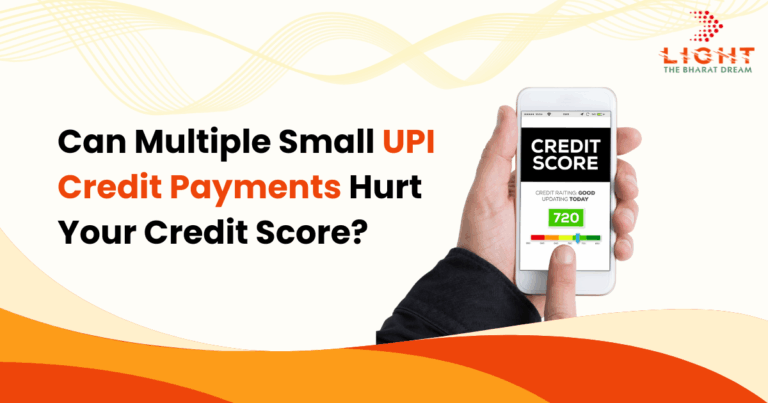
A credit score is not about how rich you are; it’s about how responsibly you use credit. It helps lenders decide whether you are likely to repay borrowed money on time. In India, credit scores generally range from 300 to 900, and higher scores make borrowing easier and cheaper. Your credit score is created and updated by credit bureaus such as:
- CIBIL
- Experian
- Equifax
- CRIF High Mark
They collect data from banks, NBFCs, and digital lending platforms. The most important factors that shape your score include:
- Payment history: Did you repay on time, every time?
- Credit utilization: How much of your available credit did you use?
- Credit behaviour: Are you using credit regularly but responsibly?
- Number of credit accounts: Too many open accounts can reduce trust
UPI payments only matter here when they are linked to credit products. Otherwise, they remain invisible to credit bureaus.
Do Regular UPI Payments Affect Your Credit Score?
For most people, regular UPI payments do not affect their credit score at all. If you are using UPI to:
- Pay from your savings account
- Transfer money you already own
Then these payments are similar to paying with cash or a debit card. They are not reported to any credit bureau and do not influence your credit history. Problems arise when UPI is used as a credit channel, even unintentionally. The moment a UPI payment involves:
- A credit card
- A pay-later facility
- An overdraft or pre-approved credit
It becomes a credit transaction, not just a payment. These transactions can be tracked and reflected in your credit report.
Types of UPI Payments That Can Impact Your Credit Score
1 UPI Payments Made Using Credit Cards
Using a credit card through UPI feels convenient because you don’t need to carry the card or enter details. But every such transaction:
- Uses your credit limit
- Increases your outstanding balance
- Affects your credit utilization ratio
When small payments are made frequently, credit usage rises quickly. Even if you pay your bill on time, consistently high utilization can make lenders view you as credit-dependent, which may slightly lower your credit score over time.
2. Pay Later and BNPL Features Inside UPI Apps
BNPL features are designed to remove friction from spending. They allow you to buy now and pay later with minimal effort. However, behind the scenes, BNPL is treated as a loan product. Risks include:
- Each BNPL service may create a separate credit account
- Repayment delays are reported
- Multiple small dues are easy to forget
Because BNPL payments are small, users often delay or ignore them, assuming they don’t matter. Unfortunately, credit bureaus treat missed BNPL payments just like missed EMI payments.
3. Overdraft and Pre-Approved Credit Linked to UPI
Overdraft facilities allow you to spend beyond your available bank balance. While useful in emergencies, frequent overdraft usage can signal poor cash management. Potential issues include:
- Interest accumulation
- Missed repayment deadlines
- Negative impact on payment history
If overdrafts are not cleared on time, they can significantly harm your credit score.
Why Small Daily Payments Can Be More Dangerous Than Big Ones
Large payments are usually planned and tracked. Small payments are not. This is why small daily UPI credit payments are riskier.
- Occur frequently
- Create multiple repayment dates
- Encourage casual spending
- Reduce repayment discipline
Over time, users lose track of how much credit they are actually using. This pattern can quietly damage credit health without triggering immediate alarms.
Common Real-Life Mistakes UPI Users Make
Many users unknowingly:
- Use UPI credit for everyday food and travel
- Activate multiple pay-later options across apps
- Forget repayment dates because amounts are small
- Ignore credit reports entirely
These mistakes don’t show immediate consequences. The impact becomes visible only when a loan or credit card application is rejected or approved at high interest rates.
How to Use UPI Safely Without Hurting Your Credit Score
UPI is not dangerous; unaware usage is:
- Prefer bank-account-linked UPI for daily expenses
- Treat UPI credit like a loan, not free money
- Limit the number of credit-based features you use
- Set auto-pay or reminders for repayments
- Review monthly credit statements
These habits keep your credit score stable while allowing you to enjoy UPI convenience.
How to Check Whether UPI Is Affecting Your Credit Score
Many users never check their credit reports, which is a mistake. When reviewing your credit report:
- Look for BNPL or pay-later accounts
- Check if any payments are marked late
- Identify unused credit accounts and close them
Checking your credit score once every 3 to 6 months helps you detect issues early and fix them before they grow.
Key Takeaways Every UPI User Should Remember
- Normal UPI payments don’t affect your credit score
- Credit-based UPI payments can
- Small habits shape long-term credit health
- Awareness is the best protection
Using UPI wisely today helps you secure better financial opportunities tomorrow.
Frequently Asked Questions (FAQs)
Q. Do low UPI payments impact my credit rating?
No, there are no effects of regular UPI payments generated out of your bank account on your credit score. But when you pay UPI with credit cards, Pay Later, or BNPL functions, it will affect your credit rating.
Q. Will I lose a UPI Pay Later payment and decrease my credit score?
Yes. A single, negligible payment defaulted by a Pay Later or BNPL service will damage your credit score. Money credit bureaus are not concerned with the amount of payment but the repayment behaviour.
Q. Is a credit card UPI bad for my credit score?
It is not that bad to use UPI with a credit card. However, the regular low payments may raise your credit usage, and the delay in repayments may harm your credit rating.
Q. What is my UPI usage doing to my credit score?
The credit bureaus, such as CIBIL or Experian, offer a free credit report. Find items associated with either BNPL, Pay Later, or UPI-linked credit accounts and check on the repayment status.
Q. How to use UPI safely without damaging my credit score?
The most secure is to use UPI connected to your savings account to pay daily bills and apply credit-based variants of UPI only when you need them. All repayments should be made at the right time.