
What the Future of UPI Looks Like

Over the past few years, UPI has transformed how India handles money. What once required cash, cards, or long bank queues can now be done in seconds with a smartphone. Whether it’s splitting a restaurant bill, paying electricity charges, or transferring money to family, UPI has become part of daily life.
But the real question is not what UPI has achieved; it is what comes next. The future of UPI looks bigger than simple peer-to-peer transfers. It is moving toward becoming a full financial ecosystem. For everyday users, this means more convenience, faster services, smarter financial tools, and even global acceptance. Understanding these changes now will help you stay ahead and use the system wisely.
How UPI Became India’s Payment Backbone
The National Payments Corporation of India implemented UPI in 2016 under the supervision of the Reserve Bank of India. The objective was modest yet strong: to build a unified system that would enable instant bank-to-bank transfers with nothing more than a mobile phone.
The difference with UPI was that it was simple. Bank details were not very complex. One could send or receive money using a mere mobile number or UPI ID. With the improvement in internet access and the affordability of smartphones, their adoption rate has been so high.
Smartphone apps such as Google Pay, PhonePe, and Paytm were created to facilitate it by creating easy-to-use interfaces. Up to today, UPI is processed by billions of transactions monthly, which proves that it is not just a choice anymore, but the foundation of the Indian digital economy.
What the Future of UPI Looks Like for Everyday Users
1. UPI Going Global
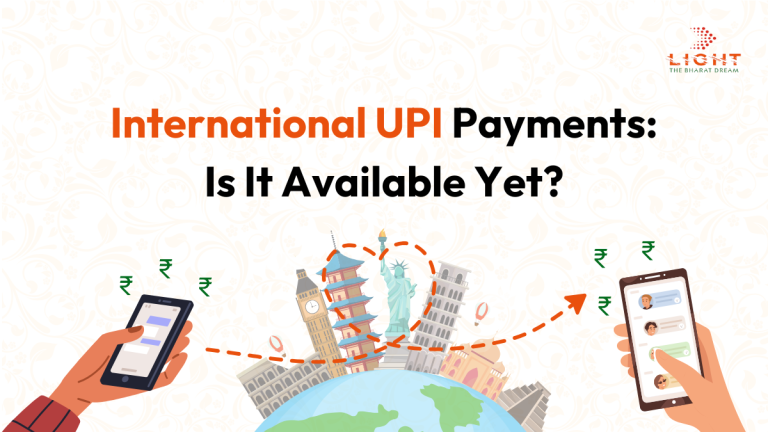
The most exciting thing that has happened is the internationalization of UPI. Rather than being restricted to India, UPI is slowly being embraced in some parts of the world markets. This implies that Indian travelers can be in a position to make payments abroad in the near future without converting currency manually or carrying international cards using their available UPI apps.
Cross-border payments are likely to be less expensive and quicker in the future. Remittance might not be costly to send money to family members in foreign countries. This growth can save the students studying in foreign countries a lot of money in transaction costs and streamline financial management for professionals working in foreign countries.
2. UPI with Credit and Flexible Payment Options
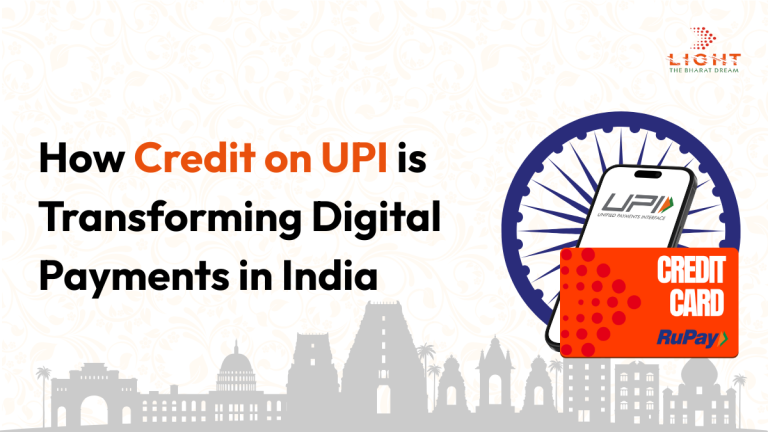
UPI is no longer restricted to bank transfer using a debit card. There is already credit integration that is going on, and it will continue to strengthen even in the years to come. Users are able to connect RuPay credit cards to UPI and use them to pay through credit instead of using their own bank balance.
In the future, UPI can be used to facilitate more liberal forms of payments like small immediate credit advances and pay-later. This would facilitate the situation of the small business owners and those in salaried positions to cover short-term expenses. More responsibility is, however, associated with easy access to credit. Consumers will be required to comprehend the terms of repayment and not spend too much. Upcoming development of UPI can be a combination of payment and lending into one seamless experience, and make it more than a transaction platform.
3. AI-Powered and Smarter Payments
The future of UPI is projected to have significant involvement of Artificial Intelligence. Rather than merely taking payments, UPI apps could develop into smart financial assistants. They would be able to review your expenditure habits and give you recommendations on how to spend better.
There is a likelihood that the fraud detection systems will improve. Dubious transactions can be alerted to immediately, which will minimize the risk of losing money. Voice-enabled commands may enable users to send money through the delivery of simple spoken commands and hence make payments even more convenient for those aged and those who are not comfortable with typing. In the long run, UPI can be changed to a personalized financial management device instead of a payment gateway.
4. Offline UPI Payments and Financial Inclusion
Internet connectivity is one of the largest obstacles to online payments. Network problems continue to be a barrier to adoption in most rural and remote locations. The UPI has a bright future of being able to make stronger offline payments.
Offline UPI will give the user the ability to make a transaction even when the internet is not active. This has the potential to attract millions of new customers to the digital economy. Shopkeepers, street vendors, and households in rural areas will be the winning sides since they will be able to offer digital payments without fear of a lack of connectivity. The move can go a long way in enhancing financial inclusion and facilitating the vision of a cash-light economy that India holds.
What Businesses Can Expect from the Future of UPI
To businesses, the development of UPI is significant. Quick settlement is better for cash flow and minimizes reliance on the traditional payment machines. Small traders are able to conduct their business without using costly infrastructure, and only use QR codes. Again, subscriptions are bound to increase. Auto-debit systems are gaining momentum, and hence, companies that provide streaming services, educational services, and utility services can charge regularly without any problems.
With the advancement of UPI technology, customer behavior can be improved through data-based findings that can help the business gain a clearer understanding of customer behavior. This will result in better marketing campaigns and customer rapport.
How UPI Will Impact Digital Banking
The future of UPI can transform the way individuals deal with banks. Users can also do most banking transactions in UPI-enabled apps instead of going to branches. Loan applications, insurance payments, and a great number of other services may transform into full digital services.
Banks can become still more intertwined with UPI infrastructure, which will be at the centre of the Indian financial system. This change will save on paperwork, accelerate approvals, and make it more accessible to the people in distant locations. In the long-term, UPI might become the primary digital interface between customers and banks (and other financial service providers).
Is UPI Safe for the Future?
Security is still one of the critical areas of UPI in the future. Fraud monitoring and risk management are being continuously enhanced with the help of the Reserve Bank of India. These improvements might be added in the future that will involve biometric authentication, more robust encryption, and fraud notifications. These efforts are to minimize cybercrime and make users more confident. Factors that influence safety, however, lie within the hands of users. It is easy to avoid suspicious links, never give PINs, always check payment requests, and this is possible to stop fraud.
Future Trends to Watch Beyond 2026
UPI has the potential to grow into additional financial segments in the future. It may be more efficient in supporting investment platforms, insurance services, and government benefit transfer. There is a possibility of more cross-border partnerships, and UPI will act as a digital payment model around the world.
The emerging economies in Africa and Southeast Asia can have a similar framework based on the example of India. In case the growth is maintained at the current rate, UPI may be one of the most powerful payment systems globally.
What Users Should Do to Stay Ready
Users are to keep pace with new features and updates in the evolving UPI. Maintaining apps will guarantee you access to the newest patches and enhancements to security. Financial stress can be avoided by getting to know the terms of credit and choosing pay-later features. Responsible use and awareness will enable the users to gain maximum advantages of the upcoming innovations without being at undue risk.
Conclusion
The future of UPI looks ambitious and transformative. It is moving beyond simple payments toward a complete digital financial ecosystem. With global expansion, AI integration, credit features, and improved accessibility, UPI is positioned for long-term growth. If managed carefully with strong security and responsible innovation, UPI has the potential to become one of the largest and most impactful digital payment networks in the world.