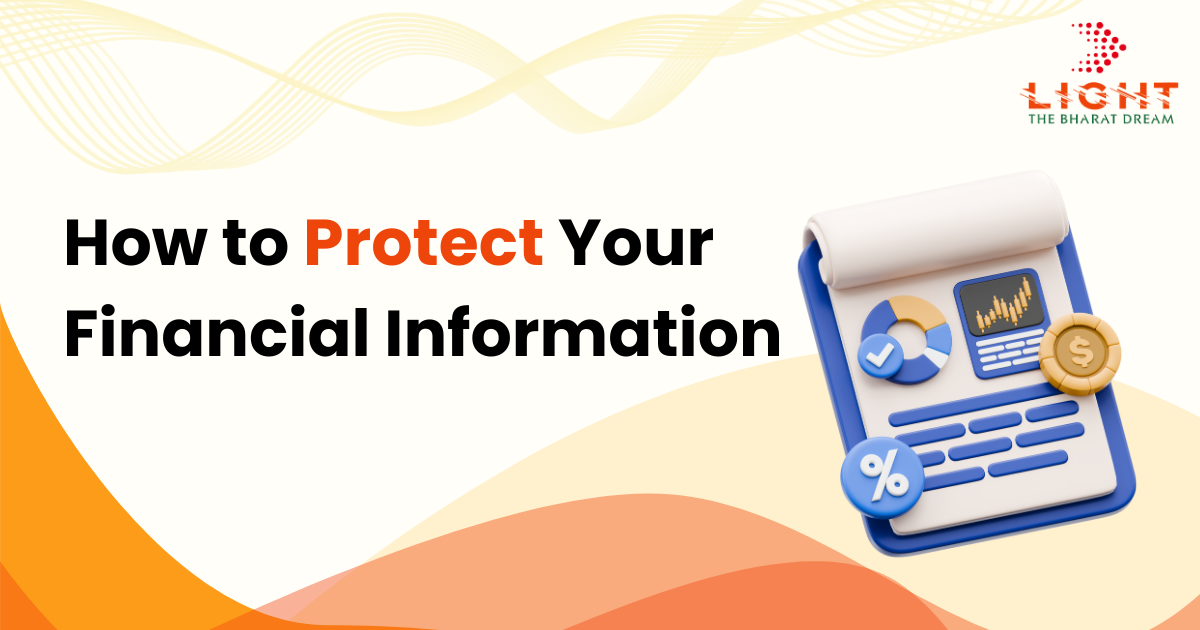
How to Protect Your Financial Information
Secrecy of your financial details has become one of the key life skills nowadays. Regardless of whether you are engaging in online banking, apps to do your shopping, or digital wallets, or even when you mostly work with cash, your financial information is always at risk. There are not only thoughtless individuals who become the victims of scammers. They are targeting the busy people, the people who can be trusted, ordinary people who are just trying to take care of their finances. This reference is authored on a layman’s level. No technical jargon. No scare tactics. Only simple explanations and things that you can actually do.
Why You Should Care About Protecting Your Financial Information
Financial information is more than just money; it’s your identity. It includes:
- Routing numbers and bank account numbers.
- Debit and credit card information.
- Online banking usernames and passwords.
- IDs and tax Data by the government.
When a person gains access to such information, then he or she can:
- Drain your bank account.
- Lessen authorized purchases.
- Open loans or a credit card in your name.
- Destroy your credit rating over a long period.
What is even worse is that most individuals understand that something is wrong weeks or months later. It is difficult to repair the damage by this time. Investing time, money, and stress to protect your financial information early saves you time, money, and stress later.
What Puts Your Financial Information at Risk?
Numerous financial information breaches occur in the normal course of things. Risk situations commonly found are:
- Purchasing products on sites that are not well-known or secure.
- Free Wi-Fi in the airports, cafes, or hotels.
- Getting calls purportedly made by banks.
- Tapping links on emails or text messages.
- Theft of wallets, telephones, or papers.
Fraudsters count on human behavior. They cause urgency, fear, or excitement in order to make you act without thinking. This is not aimed at paranoidizing you, but making you conscious. This is best fought off by awareness.
Steps to Protect Your Financial Information
Step 1: Know the Most Common Financial Scams
Fraudsters keep evolving strategies; however, the majority of frauds follow common schemes. Common scams include:
- Fraudulent emails from banks or payment applications.
- Counterfeit phone calls purport that your account is blocked.
- Fraudulent claims of money back or reward.
- Frauds based on the impersonation of employees.
Warning signs you should never ignore:
- OTPs, PINs, passwords requests.
- Messages that require urgent action.
- Risks of account termination or prosecution.
Important reminder:
Legitimate banks and financial institutions never ask for sensitive details over calls, emails, or messages.
Step 2: Keep Your Physical Financial Documents Safe
Digital fraud attracts more attention, but physical document theft is also quite a reality. Documents that require protection:
- Bank statements
- Cheque books
- Credit card slips
- Identity documents
Best practices:
- Keep documents locked up in a safe or a locker.
- Take only the required cards and go out.
- Document shredding should be done before disposal.
- Always lock documents in the vehicles or the offices.
Even a single statement they discard may be sufficient to initiate identity theft by the scammers.
Step 3: Protect Your Online Accounts the Right Way
Your online accounts are often the first target for attackers.
Create strong passwords by:
- Using at least 12 characters
- Mixing uppercase, lowercase, numbers, and symbols
- Avoiding names, birthdays, or phone numbers
Avoid common mistakes:
- Reusing the same password everywhere
- Saving passwords in unsecured notes or browsers
Enable Multi-Factor Authentication (MFA):
MFA adds an extra verification step, like a one-time code or biometric check. Even if someone steals your password, MFA can stop them from logging in.
Step 4: Secure Your Phone, Laptop, and Internet Connection
Your phone and laptop hold more financial data than your wallet ever did. Simple but powerful steps:
- Always update your device software
- Install apps only from official app stores
- Use screen locks, fingerprints, or face recognition
- Avoid jailbreaking or rooting devices
About public Wi-Fi:
Public networks are often unsecured. Avoid banking, shopping, or entering personal details on public Wi-Fi. If unavoidable, use a trusted VPN or mobile data instead.
Step 5: Check Your Accounts Regularly (Even If You’re Busy)
It does not take very long, but keeping an eye on your accounts is worth a lot. What to do:
- Check card and bank statements once a week.
- Install SMS or app notifications for transactions.
- Be aware of the new and minor bill.
Fraudsters usually check out the accounts with small deposits. It is possible to save huge losses and prolonged recovery by catching them at the first stage.
Step 6: Be Careful With Calls, Emails, and Messages
Most financial fraud starts with communication. Before responding to any request:
- Ask yourself: “Did I initiate this?”
- Check the sender’s email or phone number carefully
- Never click links from unknown sources
Safer approach:
If someone claims to be from your bank, hang up and contact the bank directly using the official number on their website or app.
Step 7: Use Credit Freezes and Monitoring
A credit freeze prevents lenders from accessing your credit report without permission. This stops fraudsters from opening new accounts in your name.
A credit freeze is useful if:
- You’ve lost personal documents
- You’ve been part of a data breach
- You want maximum protection
Credit monitoring helps by:
- Alerting you to new credit activity
- Letting you act quickly if something looks suspicious
Both tools add an extra layer of security with minimal effort.
Step 8: What to Do If You Think Your Financial Information Is Compromised
If you suspect fraud, speed matters. Act immediately:
- Get in touch with your bank or credit card company.
- Blocked cards or accounts.
- Use new passwords and MFA.
- Freeze your credit in case of necessity.
- Report the fraud to the authorities.
The quicker the reaction, the better placed one is to curtail financial losses and bounce back safely.
Extra Simple Habits That Make a Big Difference
These habits reduce risk over time:
- Go green with financial statements.
- Do not post too much personal information on social media.
- Money talk should be confidential.
- Periodically update privacy policies on applications.
The little things we do daily develop powerful defences over a long period of time.
Final Thoughts
It is not just about being afraid but also being prepared to protect your financial information. You do not need to put all this into effect today. Begin with one or two steps, and develop on them. These habits become second nature as time goes by. You have something to protect your money, your identity, and your peace of mind.